Saturday, July 19, 2014

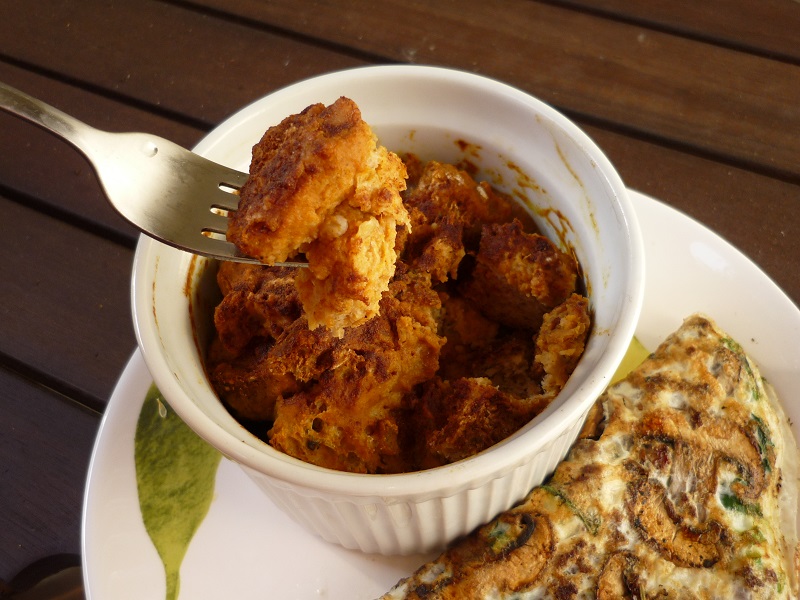
Baked Pumpkin French Toast Recipe (Single-Serve)


So I don't usually bake a big giant dish of anything sweet if there is no sharing involved. This is because I will eat all of it. I tried it once - baking a french toast casserole and I ate the whole thing in two days. It was supposed to serve 8. Lesson learned.
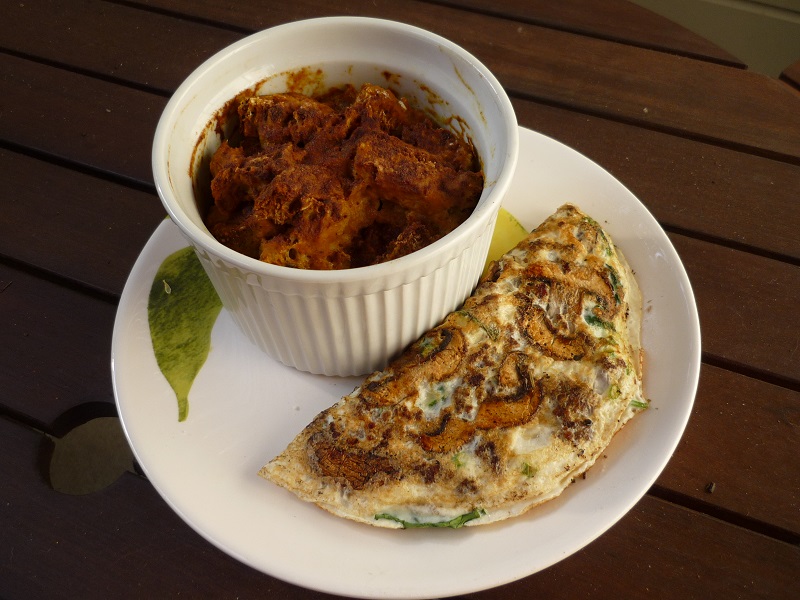

In the morning, I usually eat some sort of french toast bake along with an omelette. I've been making plain baked french toast with my base recipe and sometimes add in some fruit, but I recently started using pumpkin instead since I was having trouble getting enough fiber. Pumpkin is really a miracle food to me - it has so much fiber and creates such great texture in smoothies and custards while maintaining a low calorie count. I love using pumpkin in my smoothies to create a smoother and creamier texture.

The pumpkin creates a custard texture for the french toast bake without adding too much milk (which can make it soggy) or egg (which can make it too egg-y). Adding pumpkin to my custard mixture has been my favorite variation of my base recipe so far. I add a lot of pumpkin for a single serve dish as a filler but also for its fiber content and to make the dish more bread pudding-like. Eating this in the morning reminds of winter and the Christmas spirit. It's Christmas in July!
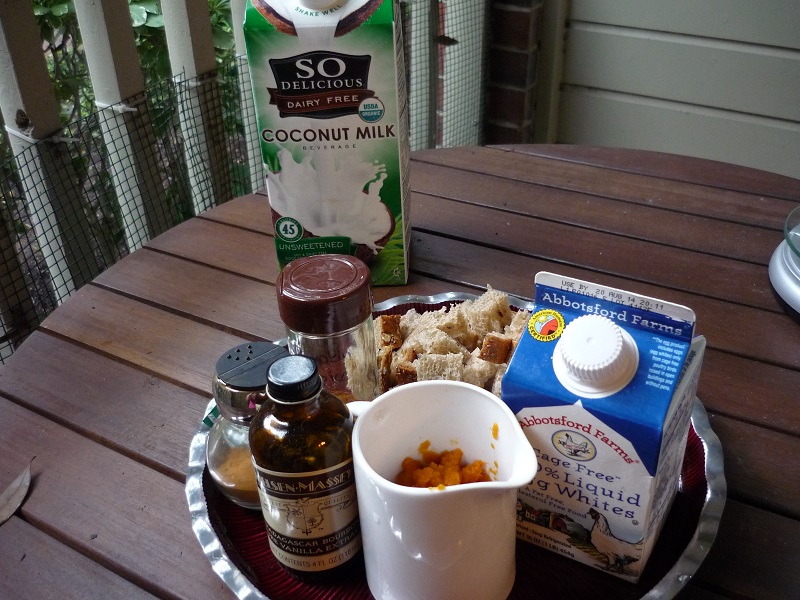

First, cube your bread and mix the egg whites/egg, milk, pumpkin, pumpkin spice, vanilla, and sweetener.
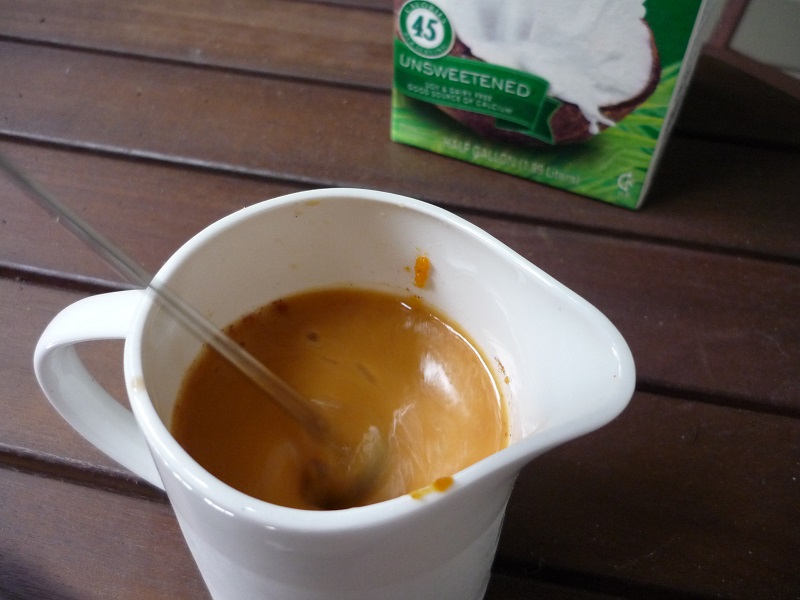

Spray your dish with nonstick spray and add 1/3 of the cubed bread. Pour 1/3 of the custard mixture evenly over the bread.
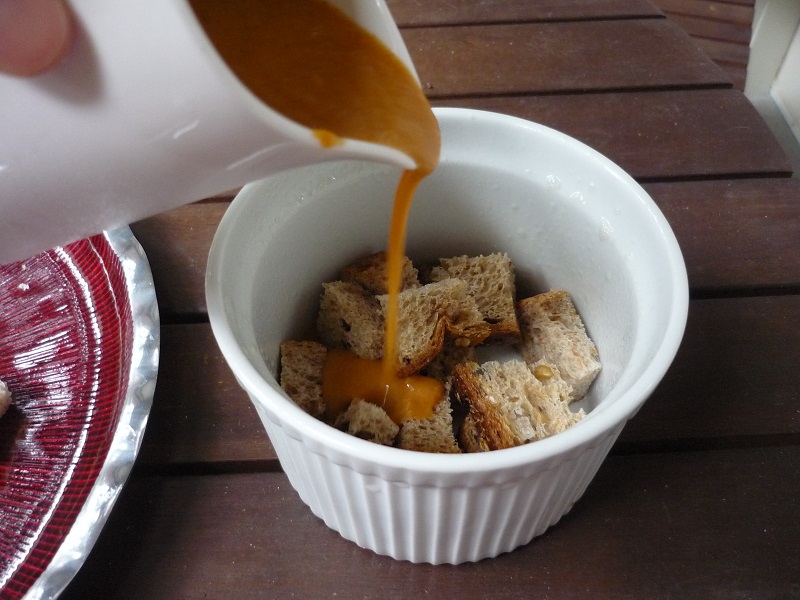

Repeat for the remaining 2/3.
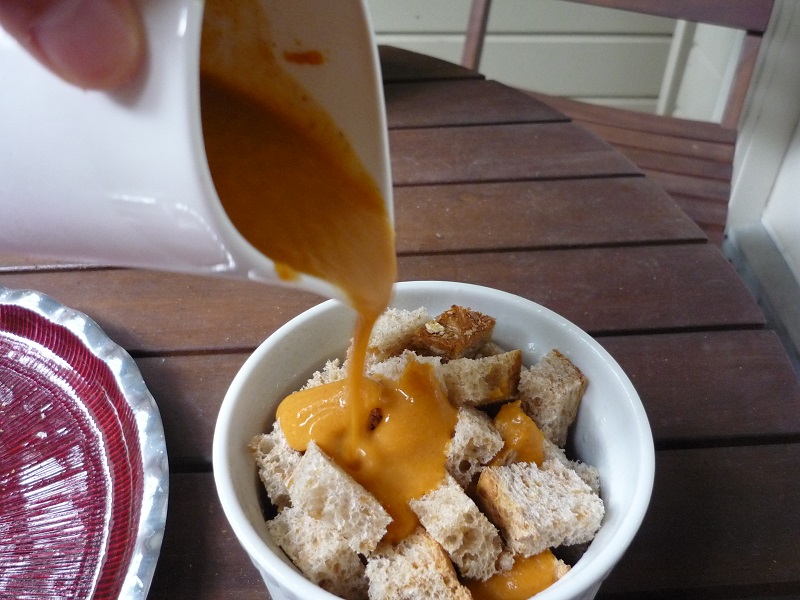

Sprinkle the top with remaining sweetener and cinnamon. Cover and refrigerate 2 hours or overnight. Baked in a preheated 350 degree F oven the next morning and serve warm.

Now you can eat this as a dessert too with some ice cream or switch up the ingredients to more indulgent ones.
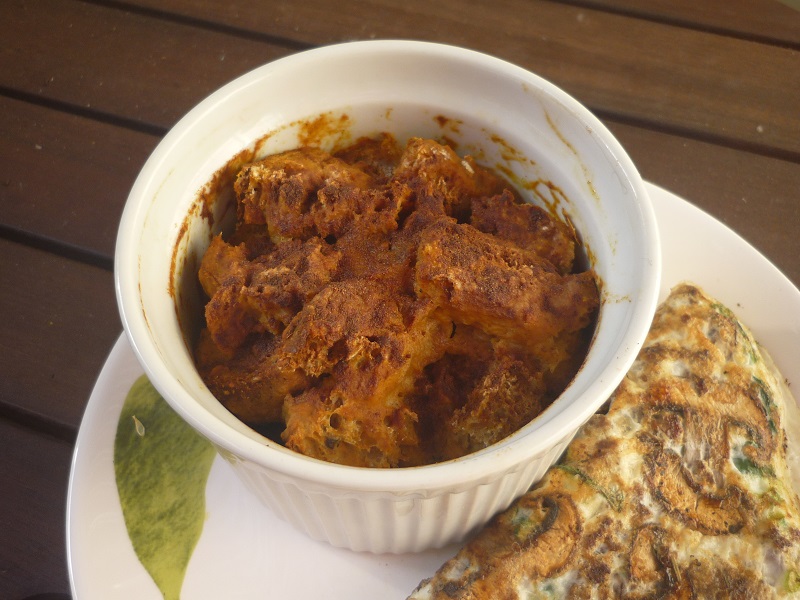

Single-Serve Baked Pumpkin French Toast Recipe

  • 2 slices of bread, cubed (I usually use sprouted grain breads since they are often drier)
  • 3 tbsp liquid egg whites, one whole egg, or two egg whites
  • 1/4 cup/2 oz milk of choice
  • 1/3 cup pumpkin puree (I like using Libby's brand)
  • 1/4 tsp pumpkin spice
  • 1/8 tsp vanilla extract
  • 1/8 tsp cinnamon
  • 2 packets stevia or 3 tsp sugar (brown sugar would work nicely here) or other sweetener

In a small bowl, mix together the egg whites/egg, milk, pumpkin, vanilla, pumpkin spice, and 1 packet stevia or 2 tsp of other sweetener. Spray an oven safe 2-cup capacity dish or soufflé dish with nonstick spray. Add in 1/3 of the cubed bread and pour 1/3 of the custard mixture over the bread. Repeat this pattern for the remaining bread and custard mixture. Sprinkle 1 packet of stevia or 1 tsp of sugar/sweetener and 1/8 tsp cinnamon over the top of the french toast mixture. Refrigerate overnight or at least 2 hours. Bake in a preheated 350 degree F oven for 30 minutes the next morning. Serve warm.

You can turn this into a bread pudding for dessert by using whole egg and half and half or cream in the custard mixture. Serving it with a nice dollop of creme anglaise, whiskey cream sauce, whipped cream, or ice cream wouldn't be a bad idea either.

> Read more ...

Monday, June 23, 2014

100 Calorie Chocolate Pudding Recipe


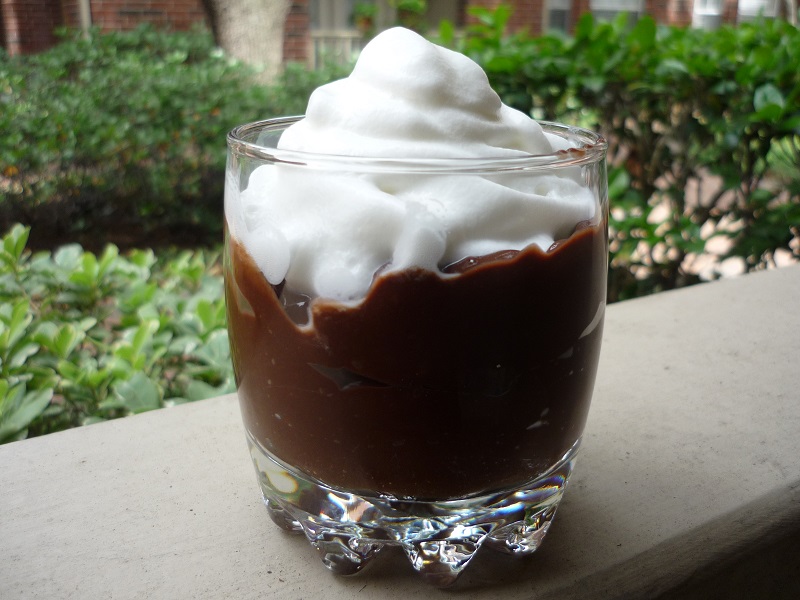
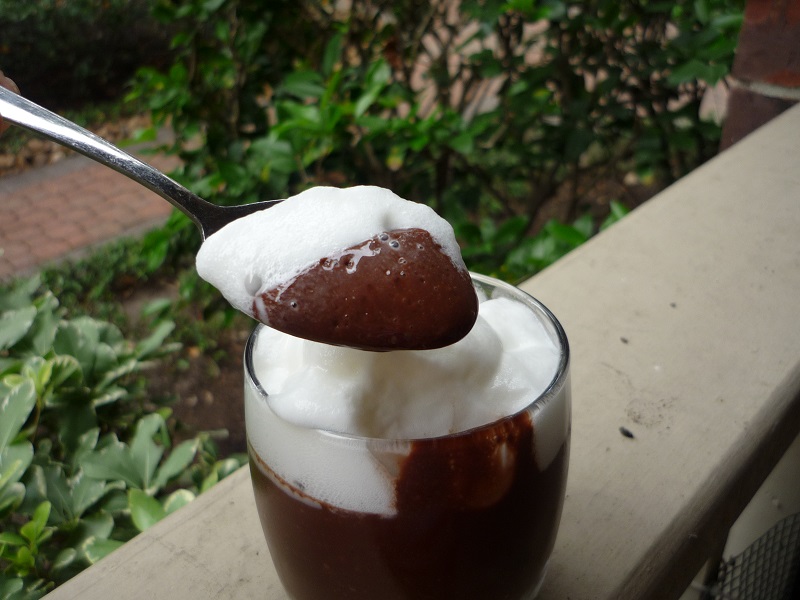
So sometimes I overindulge a little bit and have to get creative with my macros to get back on track. In comes the gelatin-based chocolate pudding. I wanted a little indulgence that wasn't all carbs and fat and made some chocolate pudding with unsweetened coconut milk, cocoa powder, gelatin, stevia, and vanilla extract. This recipe is very versatile and can be adjusted to a very indulgent pudding or a "light" pudding for when you already had your indulgent pudding. The gelatin (which is a good source of protein by the way) creates a smooth texture without having to resort to cornstarch and fat. I don't always substitute stevia for all of my sweeteners, but sometimes I need a balance and use it to tame my cravings while not indulging ridiculously. Otherwise, I would have gone the traditional pudding route or hell, even made some chocolate mousse with cream, eggs, sugar, and bittersweet chocolate!


100 Calorie Chocolate Pudding Recipe

  • 1.75 tsp (5 g) gelatin powder
  • 2 tbsp (1 oz) cooled coffee
  • 1 cup (8 oz) unsweetened coconut milk (not canned)
  • 2 tbsp (11 g) unsweetened cocoa powder
  • 1/2 tsp (2 g) vanilla extract
  • Stevia to taste (I used 2 packets of SweetLeaf)

In a medium bowl, pour in the cooled coffee and sprinkle in the gelatin powder. Let stand for five minutes. Heat the milk in either the microwave (make sure not to boil over) or on a stove top until it begins steaming (not boiling). Whisk in the cocoa powder and stevia until well mixed. Pour the milk mixture over the gelatin mixture, add the vanilla extract, and whisk until well-mixed. Refrigerate for at least two hours. Before serving, use a hand mixer to blend everything together and break up the gelatinous clumps. This will yield a smooth pudding. Serve with toppings of your choice.

You can use this as a base recipe and use any kind of milk and sweetener. Spice it up with some cinnamon next time!

Nutrition: 93 calories, 8.1 g carbs, 6 g fat, 6.4 g protein, 4.6 g fiber

> Read more ...

Tuesday, April 29, 2014

Roux-Based Cream Cheese Frosting

This past weekend, I had to bake two cakes for my sisters' birthdays. Both of them have birthdays in April and they decided to do one party. I originally was going to make each of them a 6 inch carrot cake, however one wanted carrot and the other and her family do not like carrot cake. They got matcha chiffon cake instead. That's for another post.

I've been wanting to experiment with a roux-based cream cheese frosting. I really like the roux-based buttercream from Bobby Flay's Red Velvet Cake recipe and have been researching how to turn it into a cream cheese frosting. I don't really like working with cream cheese in frosting, mostly because I tend to overbeat it and it breaks.

I've been trying to not overdo the fat in buttercreams and attempted my best to make a reduced fat buttercream using nonfat milk, neufchatel, and less butter. I adapted Bobby Flay's buttercream to suit this.

I started out with 1.5 cups nonfat milk in a small saucepan over medium-high heat.


Whisk in 7 tablespoons of all-purpose flour.


Add a little in and whisk and then repeat so it doesn't clump.


Whisk constantly, it will start to thicken fast.


Thickening and almost there.


Testing to make sure it's a thick paste. Just a little more and it's ready.


Pour into a bowl - you can see how thick the paste is; it doesn't run together when being scraped out.


Cover with plastic wrap, but make sure the plastic wrap is directly on top of the paste to prevent a skin from forming. Refrigerate for at least two hours.


Meanwhile, let unsalted butter come to room temperature.


In a mixing bowl, add 4 oz of butter and 1 cup of extra fine sugar (I just measured 1 cup granulated sugar into my Vitamix and ground it to a fine consistency). Whisk until light and fluffy and a good portion of the sugar has dissolved.


Add in spoonfuls of the flour-milk paste. I found that the paste helps break down the sugar further. The frosting might look a little broken at this point. Add in 12 oz neufchatel until thoroughly mixed; it should bring everything back together again. I wouldn't recommend this for piping. It was a nightmare to work with to frost a cake at all. I don't think I would use this exact same recipe again, but I'm determined to make changes to make it more stable. Perhaps some gelatin? I'm pretty sure I need more butter too.


Roux-Based Cream Cheese Frosting

  • 1.5 cups milk (I used nonfat, but will probably try whole next time; Bobby Flay's buttercream calls for 1 cup whole and 1/2 cup cream)
  • 1 cup superfine granulated sugar (I put 1 cup granulated sugar in the Vitamix and mixed to a fine consistency)
  • 7 tablespoons all-purpose flour
  • 4 oz unsalted butter, room temperature
  • 12 oz cream cheese, slightly cold (I used neufchatel)
  • 1 tsp vanilla extract
Method:
  1. In a small saucepan, warm 1.5 cups milk over medium-high heat.
  2. Before the milk starts to steam, whisk in flour by the spoonful.
  3. Continue whisking for a couple of minutes as the milk and flour thicken to a paste; you want to cook it long enough so that the flour is cooked (but don't burn the milk!). The paste should be fairly thick, use the pictures above as a reference.
  4. Pour the paste into a bowl and cover with plastic wrap with the plastic wrap sitting directly on top of the paste to prevent a skin from forming; Refrigerate for at least two hours.
  5. Add room temperature butter, vanilla extract, and sugar to a mixing bowl and whisk until light and fluffy (whisk attachment).
  6. Add the cold milk flour paste by the spoonful until thoroughly incorporated. The frosting might look a bit broken at this point - this probably depends if you used higher fat dairy here.
  7. Add in the slightly cold cream cheese by the spoonful until all is mixed. After adding the cream cheese, the frosting came together again.

Next time, I will try adding fat back in. I think I might use 12 oz cream cheese to 6 oz butter and use whole milk for the milk-flour paste and hopefully that will yield a firmer frosting. This was almost a pudding consistency to be honest.
> Read more ...